About the RSI Bollinger Bands Indicator
The RSI Bollinger Bands indicator for MT5 combines two well-known technical tools to generate trading signals based on momentum and volatility.
It uses the Relative Strength Index together with Bollinger Bands to identify potential reversal zones where the market may change direction.
The indicator appears in a bottom window beneath the main price area.
Inside this window, you will see the RSI line surrounded by Bollinger Bands.
When the RSI reaches the outer bands, the indicator prints arrow signals that highlight potential trade opportunities.
A buy signal appears when the RSI touches the lower Bollinger Band, suggesting that momentum has reached an oversold level.
A sell signal occurs when the RSI touches the upper band, which indicates that momentum has reached an overbought area.
These signals help traders spot possible turning points in the market.
The indicator also allows traders to adjust key parameters such as RSI period, Bollinger Band period, and deviation settings.
Free Download
RSI_Bands_v1.mq5 Indicator (MT5)
Key Features
- Combines RSI momentum analysis with Bollinger Band volatility levels.
- Displays automatic buy and sell arrows when trading conditions are met.
- Runs in a bottom window beneath the price area for easy signal monitoring.
- Customizable RSI period, Bollinger Band period, and deviation settings.
Indicator Chart
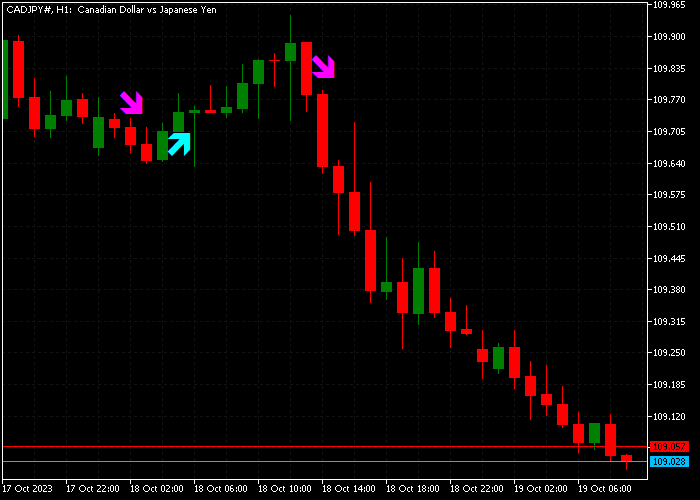
The RSI Bollinger Bands indicator shows the RSI line moving inside Bollinger Bands beneath the price area while buy and sell arrows appear when the RSI touches the outer bands.
These signals highlight potential reversal points where traders may consider entering a position.

Guide to Trade with RSI Bollinger Bands Indicator
Buy Rules
- Watch the indicator window for a green buy arrow to appear.
- The signal forms when the RSI touches the lower Bollinger Band.
- Open a buy trade after the arrow is printed and the signal is confirmed.
- This setup suggests that the market may start moving upward from an oversold area.
Sell Rules
- Look for a red sell arrow to appear in the indicator window.
- The signal occurs when the RSI touches the upper Bollinger Band.
- Open a sell trade once the arrow is printed and the signal is confirmed.
- This condition indicates that the market may start moving downward from an overbought area.
Stop Loss
- Place the stop loss below the most recent short-term support for buy trades.
- Place the stop loss above the nearest resistance level for sell trades.
- Always control risk so that a single trade does not damage overall account balance.
Take Profit
- Close the buy trade when a new sell arrow appears in the indicator window.
- Close the sell trade when a new buy arrow appears.
- Traders can also target nearby support or resistance levels.
- A reward to risk ratio of 1.5 or higher can help improve long-term performance.
Download Now
RSI_Bands_v1.mq5 Indicator (MT5)
FAQ
Can the RSI Bollinger Bands indicator be used for scalping?
Yes. The indicator can work on lower timeframes such as M5 or M15 where traders look for quick momentum reversals.
Adjusting the RSI and Bollinger Band settings may help optimize signals for faster trading environments.
What settings can be changed in the indicator?
Traders can modify the RSI period, Bollinger Band period, and deviation value.
These settings control how sensitive the indicator is and how frequently signals appear on the screen.
Why does the indicator use RSI with Bollinger Bands?
The RSI measures momentum while Bollinger Bands track volatility.
Combining both tools helps detect when momentum reaches extreme levels inside a volatility boundary, which often precedes short-term reversals.
Summary
The RSI Bollinger Bands indicator offers a practical approach to spotting potential market reversals by combining RSI momentum with Bollinger Band volatility levels.
The built-in arrow signals make it easy to identify possible buy and sell opportunities without complex analysis.
Its customizable parameters allow traders to adjust the indicator for different strategies and timeframes.
Whether used for scalping or short-term trading, it provides a straightforward way to monitor momentum extremes and react to changing market conditions.